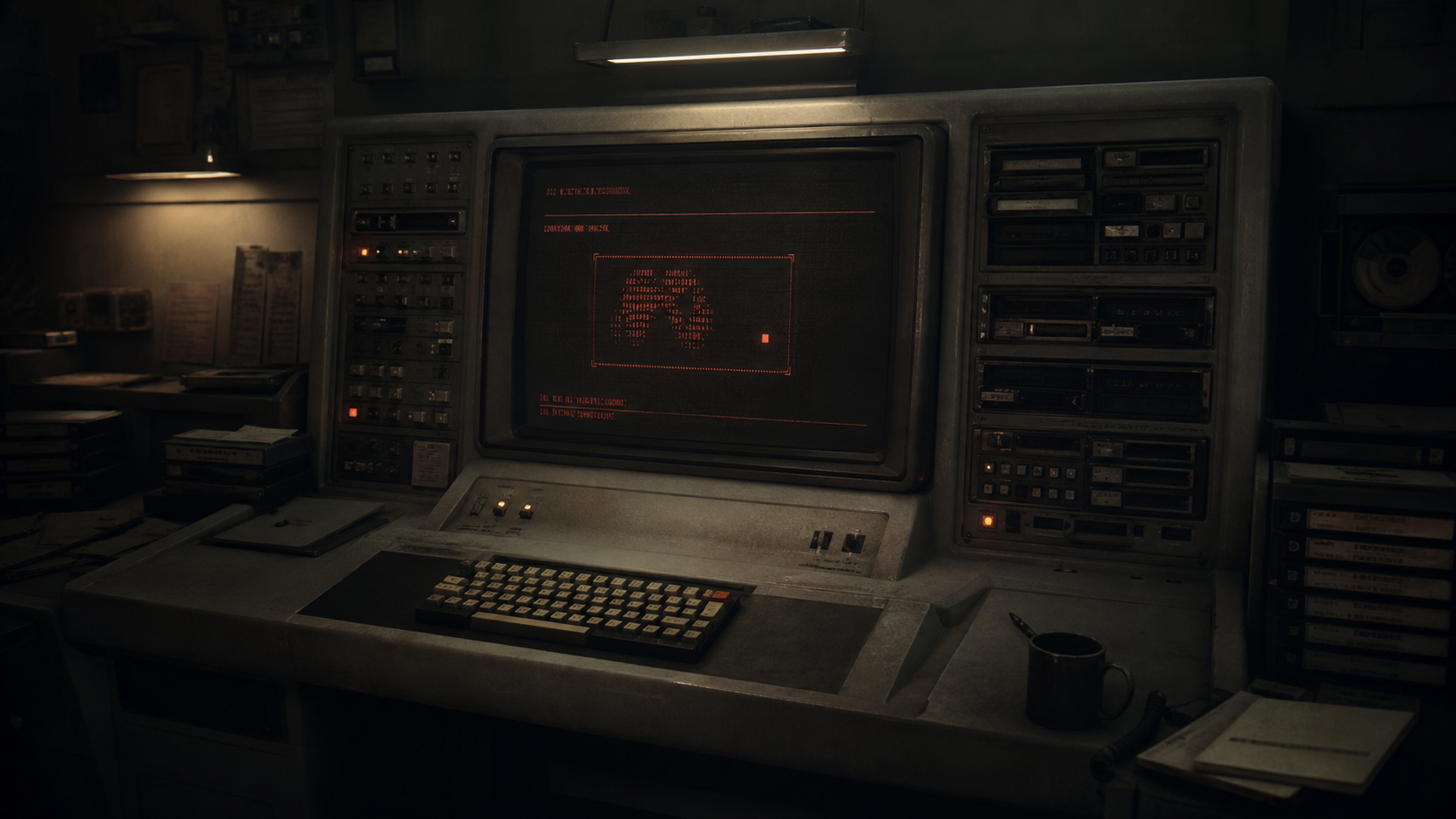
TERMINAL / DISPLAY
IBM PLEX MONO
ABCDEFGHIJKLMNOPQRSTUVWXYZ 0123456789
CTRL CONTAINMENT FILE
> SUBJECT SWARM · USER SIGNED IN_
CTRL CONTAINMENT FILE
> SUBJECT SWARM · USER SIGNED IN_
17 / Site 2 The CTRL Department Vault - LOOK
What you are scrolling is the Vault look — shown, not catalogued. Cassette retrofuturism. CRT computer terminals. Analog, immersive 2D and 3D elements in the same room. Color, type, hardware, character signals, then the terminal on the tube.
Signal red is the only loud color. Everything else is oxide, graphite, cream panel, and tube black.
The type on the tube is the type. IBM Plex Mono for terminals. IBM Plex Sans for operator chrome.
On screen: type → mount → glitch → resolve. A blinking block cursor is the presence indicator.
Hardware you can touch. Ribbed panels, cassette libraries, analog keys, hanging tungsten, amber lamps.
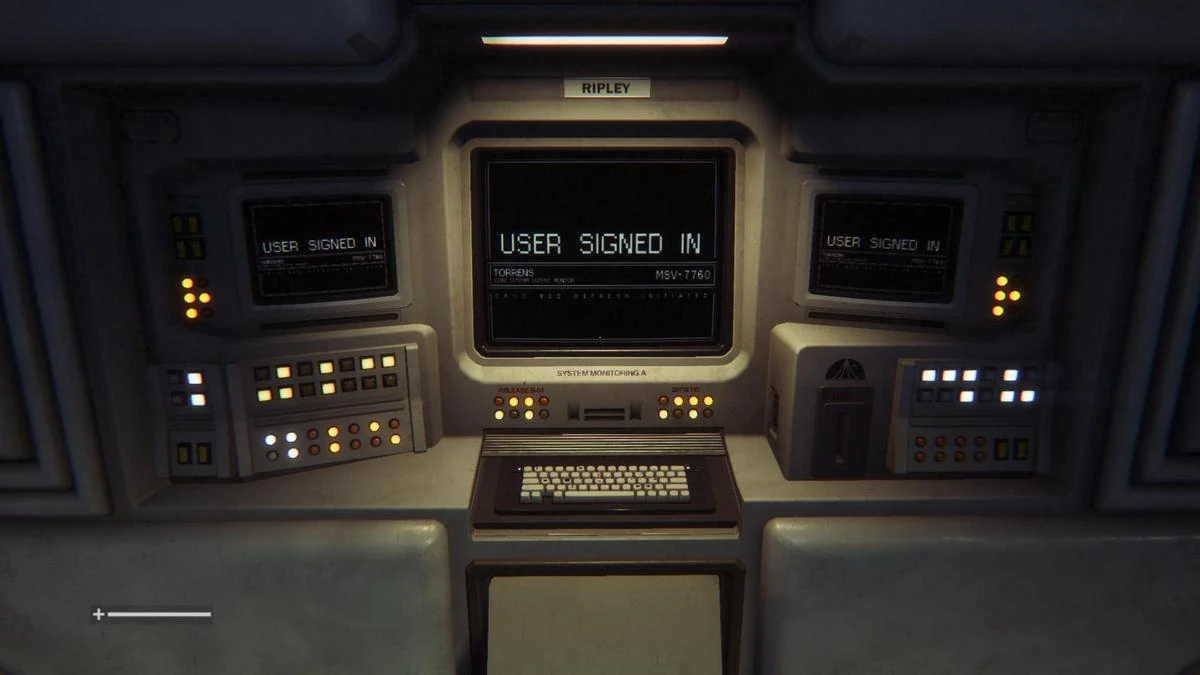
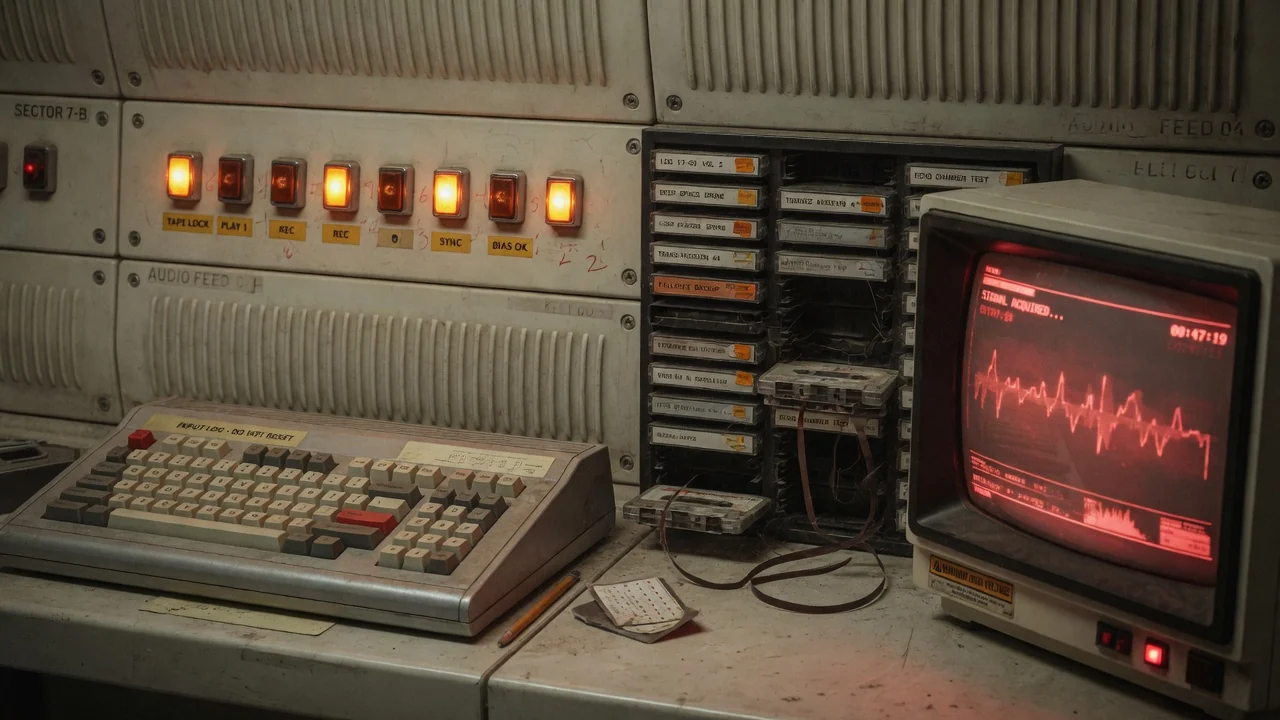
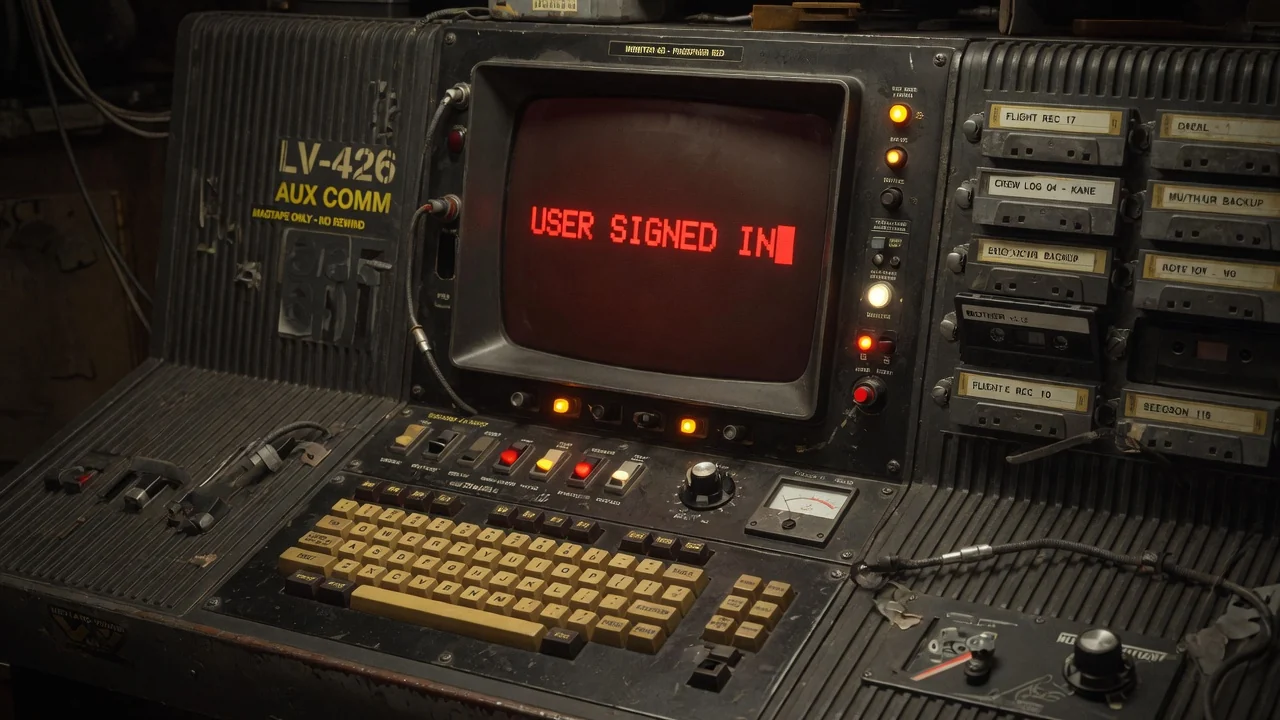
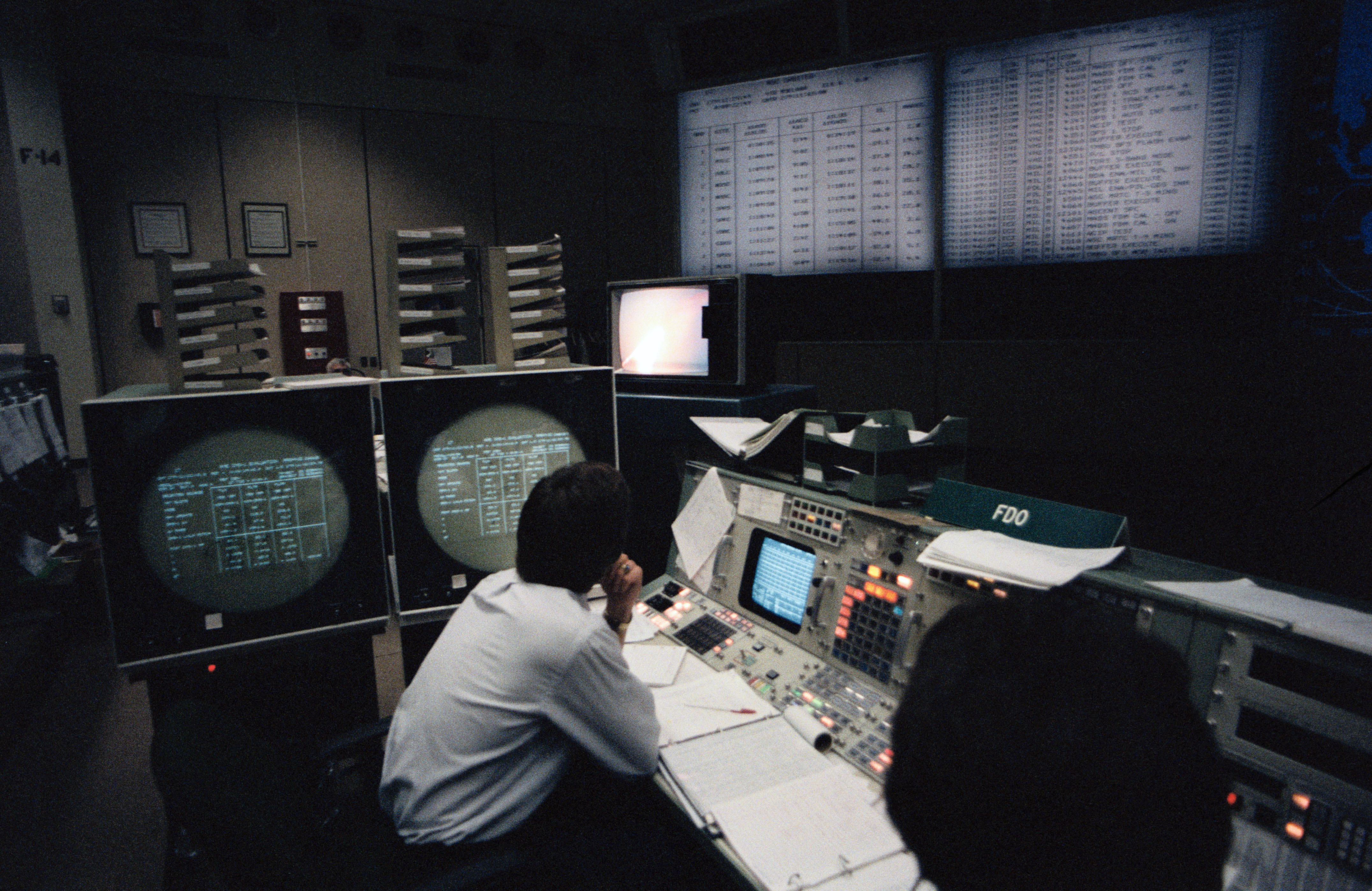
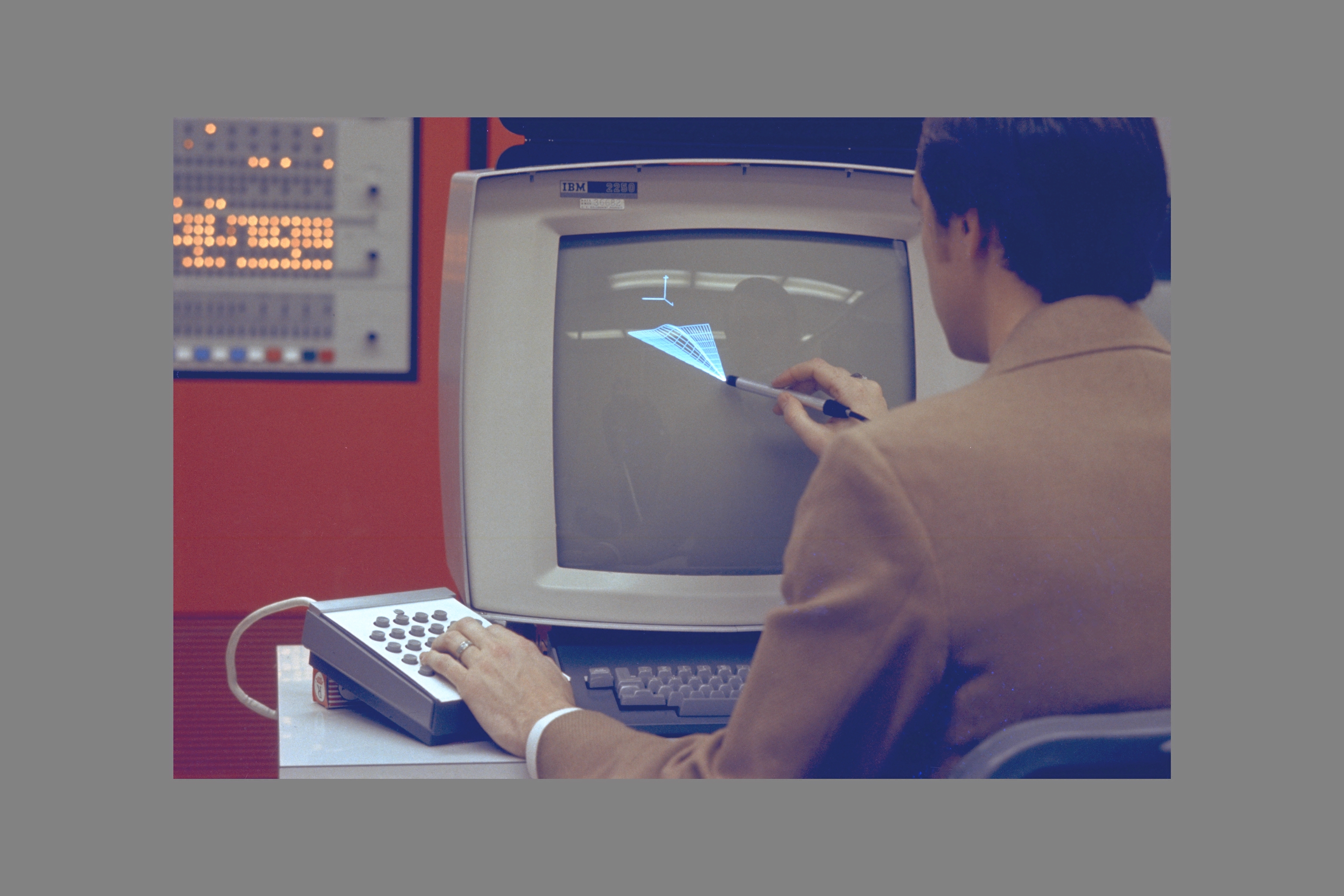
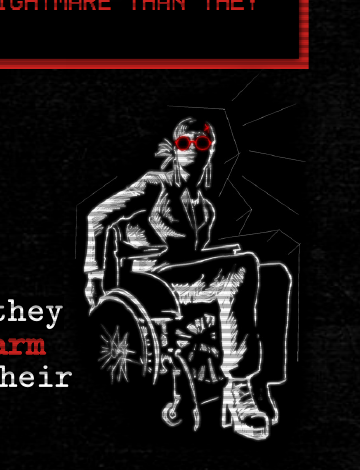
The supplied concept one-pager is treated as a visual source, not a production still. Characters become red line signals and terminal silhouettes; story naming remains governed by the current CTRL canon.
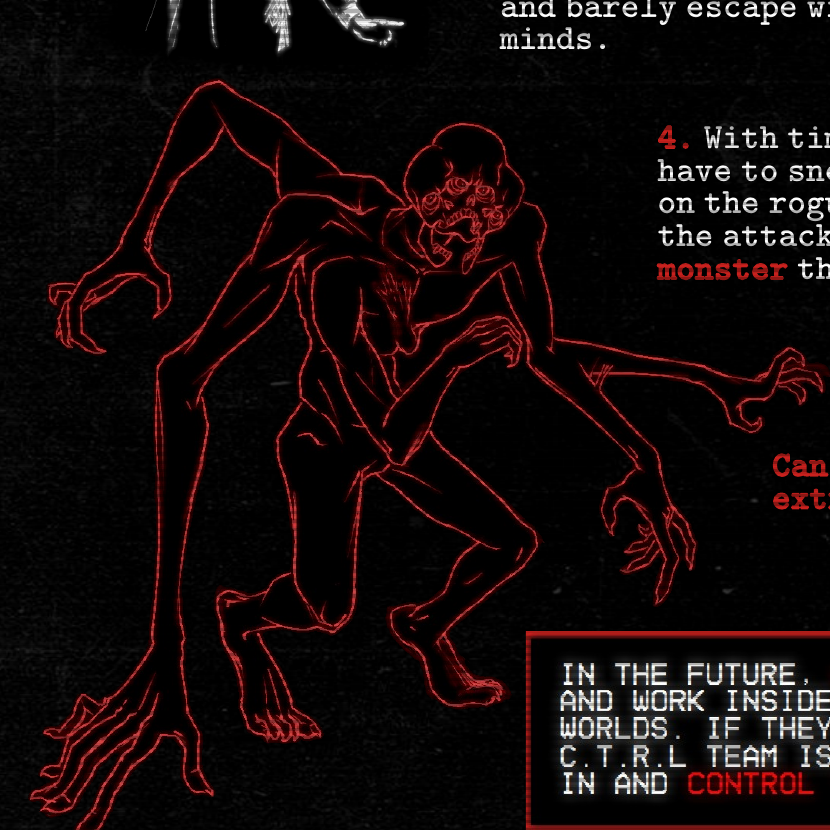
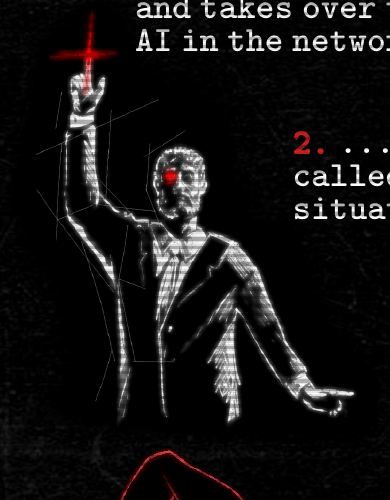
This Locust is a real 66×40 glyph conversion produced in the vendored MIT core of ASCII Motion. It is text, so it can flicker, mutate, reveal, and respond without becoming another raster overlay.
The page should feel like an evidence terminal under stress, not a generic “hacker” UI. The machine reveals information in controlled stages.
Copy appears as operator output: concise, uppercase, and paced. Use the cursor as presence, not decoration.
Images and ASCII resolve into a stable frame. Preserve the composition long enough to read.
Mutate a few glyphs or displace one scan band. Never obscure primary information continuously.
Return to a calm, readable state. Horror comes from the interruption, not permanent noise.
Keep diagnostic text and character fragments near the perimeter; central content remains clear.
Honor reduced motion. Every animated ASCII scene must have a legible static state.
An old A.I. goes rogue inside a pesticide company’s servers. The C.T.R.L. team enters the network to contain the swarm — before control changes hands.
The workstation is a physical set that already runs the Vault UI. The live containment screen plays on the next channel — not a second still on this board.